
VR-Dreamer

Practice & Impact

Four recurring, anonymized observations from VR-Dreamer's practical work. These are not results from clinical studies.

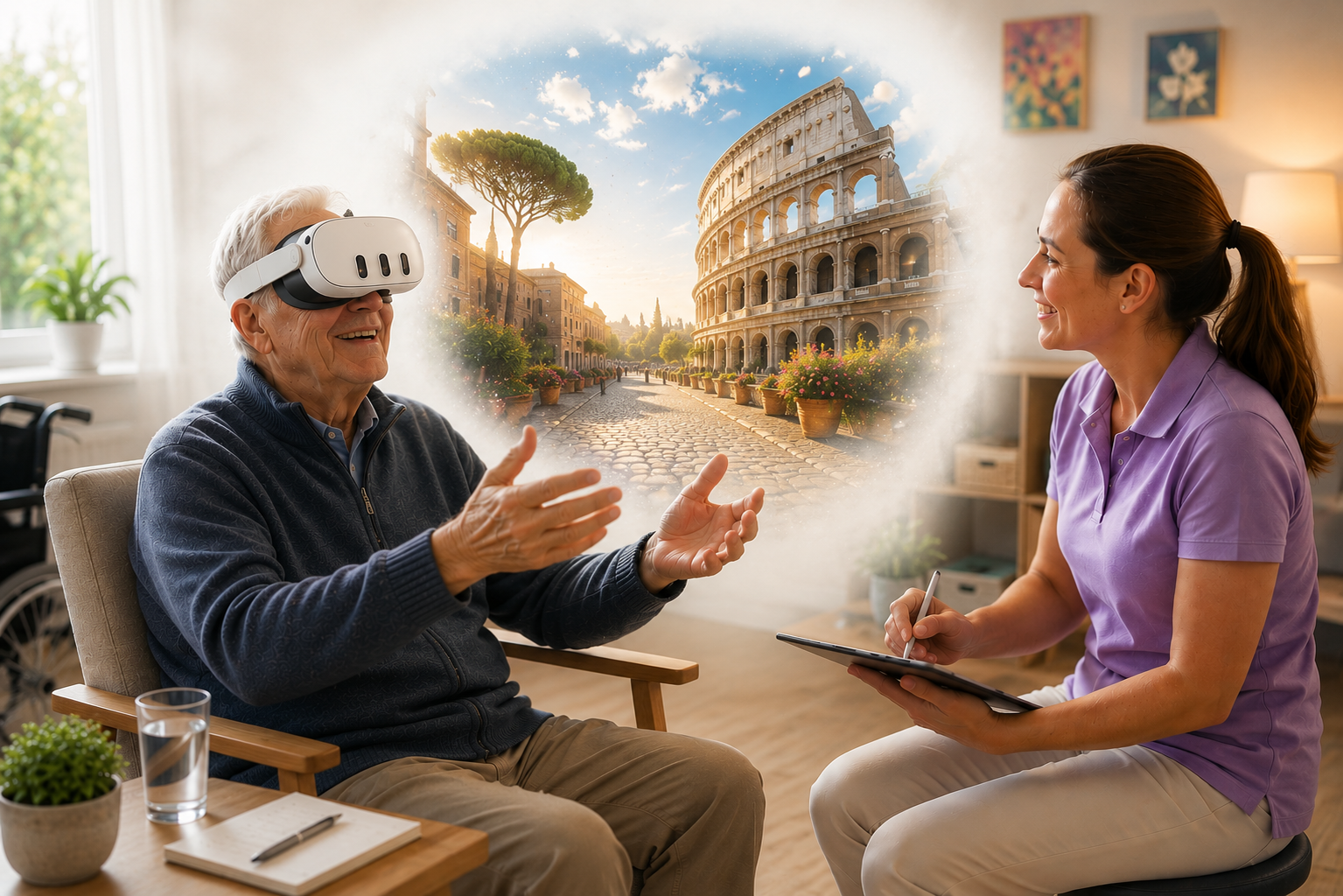
An older man wearing a VR headset smiles and reaches his hands toward a floating memory scene showing a historic city street, while a care professional sits across from him taking notes on a tablet.

Observations from Practice

Four recurring themes

Discovery and new experiences

Virtual reality can open up environments and experiences to a person that would otherwise be inaccessible due to their health condition or life situation. It is not just about viewing images, but about the feeling of presence and the possibility to actively explore a new space. New environments, virtual travel or unexpected perspectives can spark curiosity and, for a moment, expand the boundaries of familiar everyday life.

Emotional regulation and calming

Immersion in a carefully chosen visual and acoustic environment can reduce the amount of disruptive stimuli and promote calm. Reactions are individual: for some the slow movement of dolphins is calming, for others the regularity of rain, waves or music.

Activation and engagement

Expressive or emotionally meaningful virtual content can foster interest, smiling, communication, rhythmic movement or active participation – even in people who tend to be passive in their familiar environment.

Movement as the result of meaningful activity

When movement produces a visible and interesting result, a person doesn't have to perceive it as exercise. Soap bubbles, butterflies, spatial painting or an interactive game can motivate repeated movement, because the activity itself brings joy, curiosity or a sense of creating something.

Questions about how we work?

Ask a question
Request a demonstration